Bank of England raises Bank Rate to 4 percent on an 8 to 1 vote
The first UK rate increase in more than three years, with the Bank now projecting inflation near 5 percent by mid 2027.
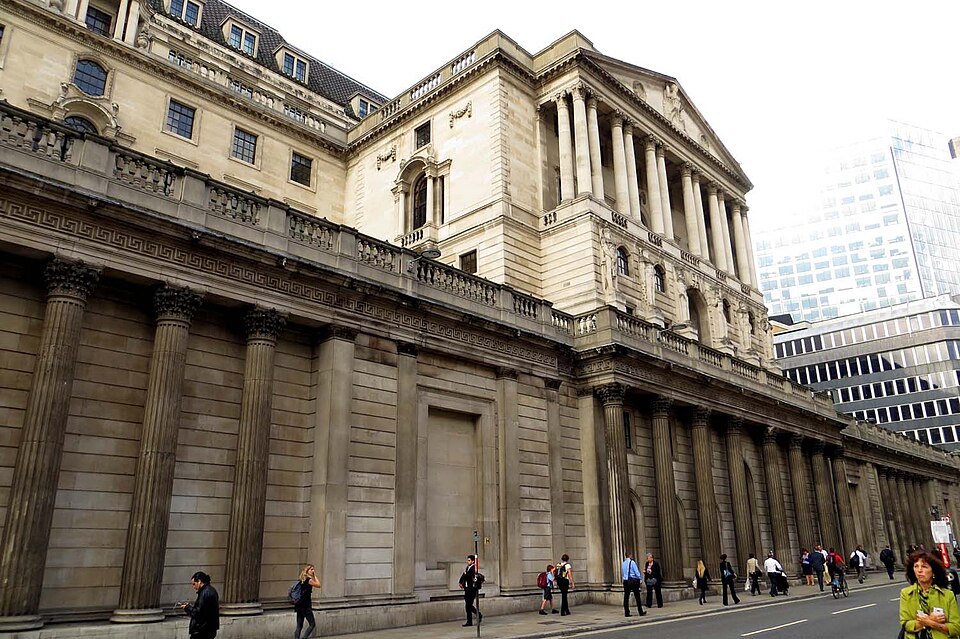
What happened
The Bank of England raised Bank Rate by a quarter of a percentage point to 4 percent on Thursday 5 November, after its Monetary Policy Committee voted 8 to 1. [1]
The Bank set out the decision in its Monetary Policy Summary, November 2026. Andrew Bailey, Sarah Breeden, Swati Dhingra, Megan Greene, Clare Lombardelli, Huw Pill, Dave Ramsden and Alan Taylor voted for the quarter point. Catherine L Mann voted for half a point, to 4.25 percent. [1]
The BBC and the Guardian reported that it is the first increase in more than three years. In September the committee had held the rate at 3.75 percent by 6 votes to 3, with Greene, Mann and Pill voting to raise it. [3, 4, 5]
Why it matters
The Bank said 'the degree of inflationary pressure in the pipeline is now sufficient to warrant an increase in Bank Rate.' Consumer prices were 3.5 percent higher in the year to September than a year before, the Office for National Statistics reported, against the 2 percent target. [1, 6]
The BBC reported that the change reaches 510,000 tracker mortgage holders at once, adding 31 pounds a month to a typical tracker loan by UK Finance's estimate. [3]
The Bank's reasons in its own words
The summary says the conflict in the Middle East is in its ninth month and global energy prices have kept rising. It says there remains 'limited evidence of knock-on effects on other prices and wages', while activity has generally been stronger than expected. [1]
The Bank said inflation is now expected to reach around 5 percent by the middle of 2027, then fall. In its November Monetary Policy Report, the central projection has inflation averaging 4.9 percent in the second quarter of 2027 and back at the 2 percent target in the third quarter of 2028. [1, 2]
The members differed on what comes after. Alan Taylor wrote that 'this is not the start of a hiking cycle' and called it a 'one-for-now' insurance move. Huw Pill wrote that a single quarter point rise 'is unlikely to be sufficient'. [1]
Against the forecasts
A Reuters poll before the meeting pointed to a 7 to 2 vote, with Taylor and Dhingra seen as most likely to vote to hold. Both voted for the increase, the minutes show. [7, 1]
What settles it next
The Office for National Statistics publishes October's consumer price figures on Wednesday 18 November. The minutes of the committee's next meeting, ending Wednesday 16 December, are due on Thursday 17 December. [6, 1]
The summary says policy 'is not on a pre-set path' and that the committee will judge the evidence at each meeting. [1]
Who it reaches
No company is tagged: the reports read name no listed lender. The BBC reported that 470,000 holders of variable rate mortgages wait on their lender's response, and that Moneyfacts put the average two-year fixed rate at 5.96 percent on 4 November. [3]
Sources
- Bank of England, Monetary Policy Summary and minutes of the Monetary Policy Committee meeting ending 4 November 2026, published 5 November 2026 regulator
- Bank of England, Monetary Policy Report, November 2026 regulator
- BBC News, Interest rates hiked to 4% in first increase in over three years, 5 November 2026 press
- The Guardian, Bank of England raises interest rates to 4%, the first increase for more than three years, 5 November 2026 press
- Bank of England, Monetary Policy Summary and minutes, September 2026, published 17 September 2026 regulator
- Office for National Statistics, Consumer price inflation, UK: September 2026, released 21 October 2026 regulator
- Reuters via Yahoo Finance, Bank of England poised to raise rates but may push back on bets for more, 2 November 2026 press
Research, not advice. Every figure above names the source it comes from.